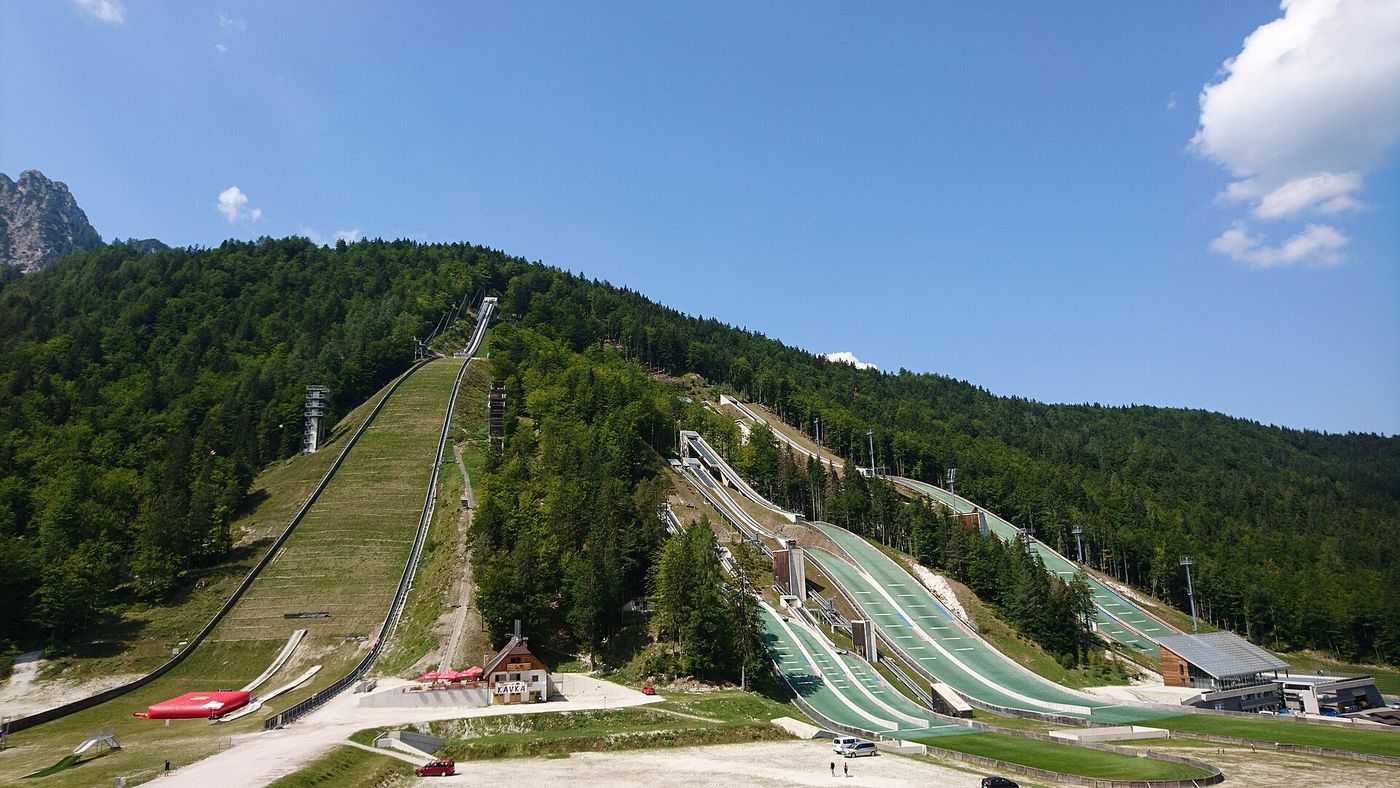
PLANICA, Slovenia — The landing slope at the Planica Nordic Center was a sheet of green on Friday morning — not grass, but hundreds of thousands of plastic bristles, kept slick with a fine spray of water. Nika Oblak dropped onto the porcelain in-run, flew 128 meters and landed on it with a sound like a broom on a wet floor.
“In August this is normal,” said Ms. Oblak, 22, who finished ninth in last season’s World Cup standings. “In October it starts to feel strange. You want to hear snow.”
Ski jumpers have trained on artificial surfaces in summer for decades, and the sport runs a Grand Prix series on plastic through September. What is new is how long the plastic season now lasts. Ten years ago the Slovenian team typically moved onto snow in the second week of November. Last year it was the first week of December. This year, with the valley at 950 meters still 12 degrees Celsius at midday, the coaches are not making predictions.
“We are preparing two plans and we will know which one we are using about three days before the first competition,” said Matevž Kranjc, the head coach of the Slovenian women’s team. The World Cup season opens in mid-November in Lillehammer, Norway, and comes to Planica in March.
Planica’s solution has been to make its snow early and bury it. Since January, a 40,000-cubic-meter pile has sat under a layer of wood chips and white tarpaulin at the edge of the complex; about 70 percent of it has survived the summer. In late October, if temperatures permit, it will be spread onto the normal hill and topped with freshly made snow from 18 cannons. The electricity cost, the center’s director said, has roughly doubled in four years.
“It is a ski jumping hill, and in a few years I think it will also be a refrigeration project,” said the director, Rok Mlakar. “We have no choice. Either we make winter or we do not have a season.”
The International Ski and Snowboard Federation has quietly allowed more World Cup events to be held on mixed surfaces — plastic in-run, snow landing — and some coaches believe a fully plastic World Cup competition is only a matter of time. Mr. Kranjc is not opposed. “The flight is the same,” he said. “The physics do not know what month it is.”
Ms. Oblak climbed back up for another jump. Below her, the valley was bright with autumn beech, and the only white in sight was the tarpaulin over the snow pile. “We call it the glacier,” she said. “It is the only one we have left.”
A version of this article appears in print on Oct. 11, 2026, Section D, Page 17 of the European edition with the headline: No Snow, No Problem? Slovenia’s Ski Jumpers Are Flying Off Plastic Deep Into Autumn.