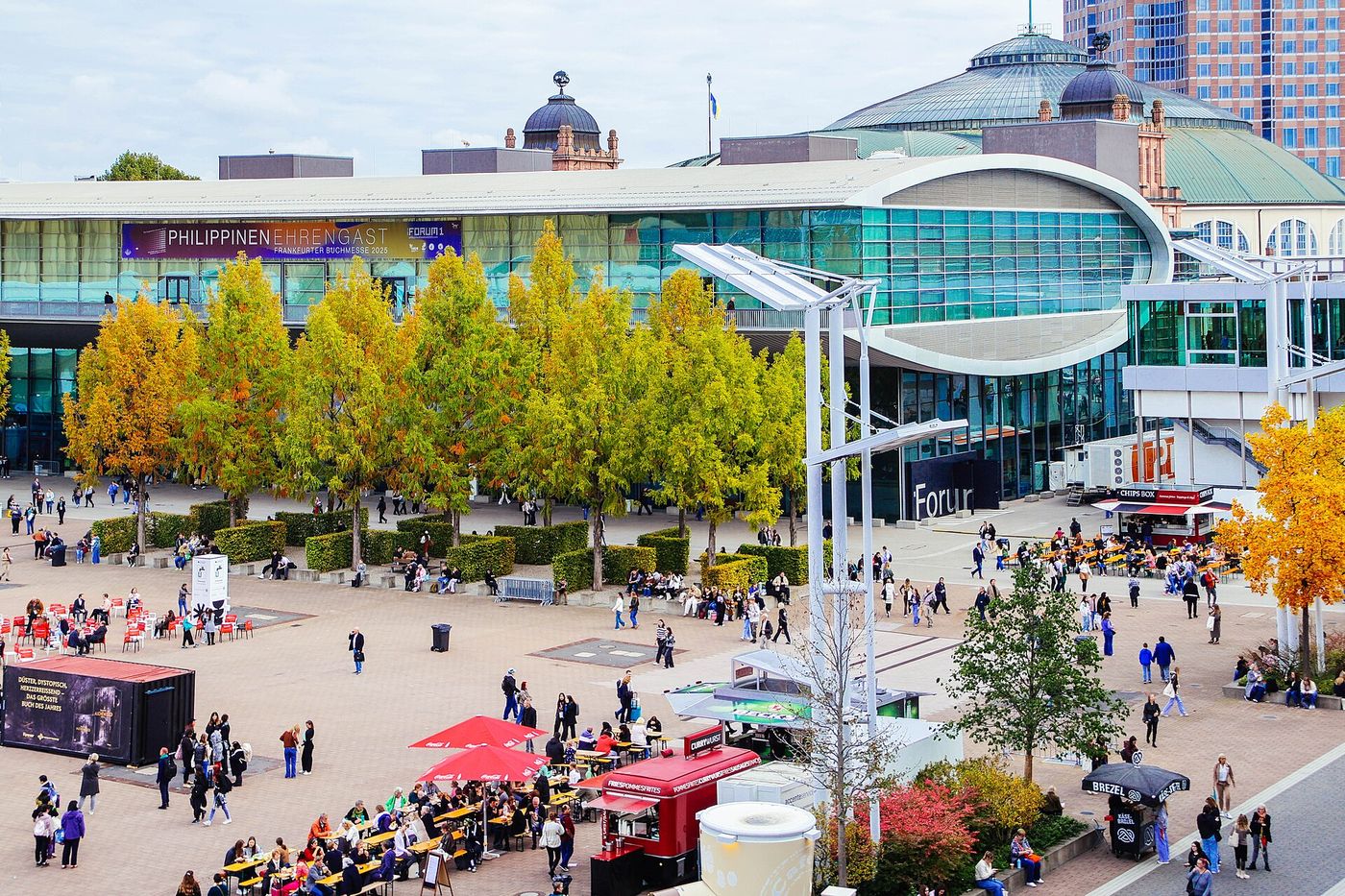
FRANKFURT — The most sought-after novel at this year’s Frankfurt Book Fair is 290 pages long, is set almost entirely in a single apartment block in Brno, and was available to most of the editors chasing it only as a 40-page sample in English. By Friday, rights to Markéta Vondráčková’s “The Quiet Floor” had sold in 19 languages.
“I have not read it. I have read what I could, and I believed it,” said Tobias Rennert, publisher of Edition Mittag in Munich, who acquired the German rights after a three-way auction. “That is the state of things. If you wait for the full translation, it is gone.”
The Czech Republic is this year’s guest of honor at the fair, which closes Sunday, and its pavilion has been among the busiest in the halls. But the appetite extends well beyond Czech writing. Sales of translated fiction in Britain rose about 24 percent last year, according to industry figures, and now account for roughly 7 percent of all fiction sold there, up from 3 percent a decade ago. France, Italy and Spain report similar growth. Readers under 35 are driving most of it.
“Something has shifted in who the reader thinks the world is,” said Hélène Rouvier, a Paris literary agent who represents authors from Portugal, Romania and Georgia. “Ten years ago I had to explain where a book came from. Now that is the pitch.”
Publishers offered various explanations: social media communities built around international literature, a string of prizes that have favored translated work, and a generation that grew up streaming television in subtitles. Several also cited fatigue with the sameness of English-language commercial fiction.
There was a shadow over the celebration. Panels on the use of artificial intelligence in translation drew standing-room crowds, and a letter signed by about 1,400 literary translators was circulated in the halls, calling on publishers to commit to human translation of fiction and to disclose when A.I. tools were used. Several large publishers have begun using machine translation for the first drafts of nonfiction and commercial fiction, with human editors revising.
“The boom is built on our work and some of the people celebrating it are planning to replace us,” said Kateřina Dvořáková, who has translated Czech fiction into English for 20 years and signed the letter. “A machine can carry the plot across. It cannot carry the silence.”
Ms. Vondráčková, 41, who was teaching secondary school in Brno until last year, seemed slightly stunned by the week. Asked what she made of 19 countries buying a book about one staircase, she thought for a moment. “Everyone has a neighbor,” she said. “Everyone has a floor above them.”
A version of this article appears in print on Oct. 11, 2026, Section C, Page 17 of the European edition with the headline: At the Frankfurt Book Fair, Translated Fiction Is the Hottest Property in the Hall.