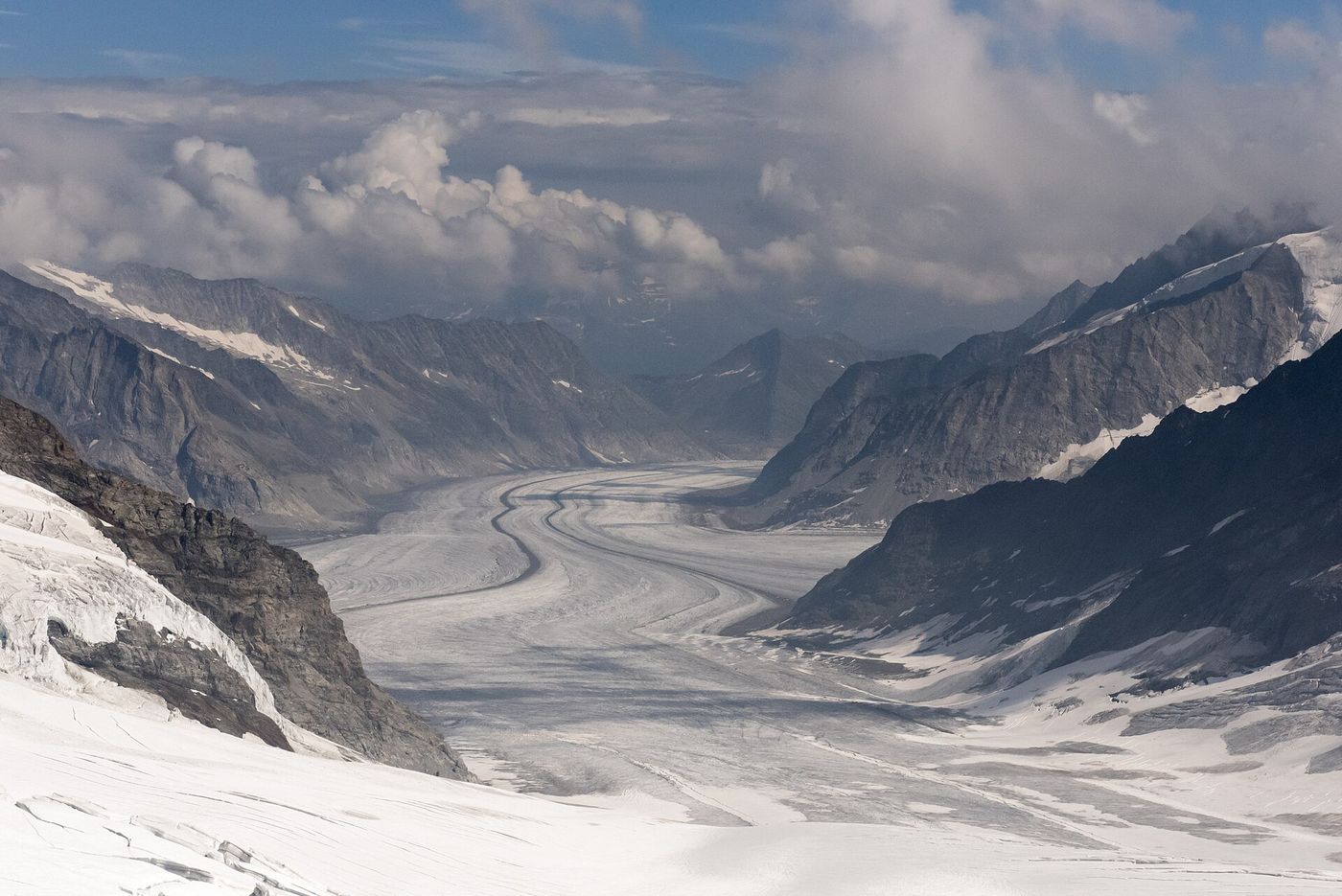
BETTMERALP, Switzerland — From the ridge above this village the Aletsch still looks immense, a river of ice 20 kilometers long curving between the peaks. The survey stakes along its edge tell a different story.
Measurements completed this month show the glacier's tongue retreated 60 meters over the summer and lost an average of more than two meters of thickness across its surface. Both figures are among the highest recorded since monitoring began in the 19th century.
The summer was not exceptional. That is what worries the scientists who take the measurements. “A normal summer now does what a record summer did twenty years ago,” said Dr. Matthias Huss of the Swiss glacier monitoring network.
Downstream, the consequences are practical: hydropower operators are revising their long-term output forecasts, and the village has begun planning for a future in which the glacier that gives it its name is no longer visible from the cable car.
Current models project that the Aletsch will lose most of its volume by the end of the century under all but the most optimistic emissions scenarios.
A version of this article appears in print on Oct. 11, 2026, Section A, Page 7 of the European edition with the headline: The Aletsch Glacier Lost Another 60 Meters This Summer.